
IoT in Hospitals: Powering Patient Care with Reliable PoE switches

The healthcare industry is undergoing a rapid digital transformation. According to Deloitte, over 60% of hospitals in the United States have already invested in Internet of Things (IoT) technologies to improve patient monitoring, streamline workflows, and enhance outcomes. But here’s the catch: when IoT networks fail, patient safety is at risk. Even a few minutes of downtime can disrupt critical medical devices and compromise care.
At Omnitron systems, our engineering team has spent decades designing reliable networking solutions—especially through our Omnitron PoE Ethernet Switches—for mission-critical environments, including hospitals and healthcare systems. In this guide, we’ll explore the role of IoT in hospitals, why Power over Ethernet (PoE) is the backbone of modern healthcare networks, and how administrators and IT leaders can deploy scalable, safe, and efficient healthcare IoT solutions.
What Does IoT in Hospitals Mean Today?
IoT in hospitals refers to the network of connected medical devices, sensors, and systems that exchange data to improve patient care and hospital operations. This includes:
- Patient monitoring systems: tracking vitals in real time.
- Smart infusion pumps: ensuring accurate medication dosing.
- Asset tracking systems: for critical equipment like ventilators.
- Nurse call and alarm systems: linked directly to staff devices.
- Building automation: that controls HVAC, lighting, and energy usage.
In short, IoT is what transforms a traditional healthcare facility into a smart hospital. But all these connected systems require reliable connectivity and consistent power—that’s where PoE switch comes in.
Why Reliable Power over Ethernet (PoE) Matters in Healthcare
Unlike consumer IoT devices, medical IoT devices cannot afford downtime. If a patient monitoring system loses power for even a few seconds, it can delay critical alerts. A faulty connection in a nurse call system can put lives at risk.
Power over Ethernet in healthcare provides both power and data over a single cable, ensuring medical devices stay online with fewer points of failure. Omnitron’s engineers often emphasize that a reliable PoE switch is not just an IT issue—it’s a patient safety issue.

According to the U.S. Department of Health and Human Services (HHS), reliable digital infrastructure is now considered essential to hospital safety and regulatory compliance.
Key Benefits of Using a PoE switch for Hospital IoT Networks
Hospitals implementing PoE medical devices and networking solutions see immediate benefits:
- Continuous Power + Data in One Cable
Simplifies cabling, reduces clutter, and minimizes potential failure points—critical for patient monitoring systems and telemedicine carts. - Simplified Infrastructure
No need for separate electrical wiring, which reduces installation costs and speeds up deployment. - Scalability for Future Devices
As hospitals adopt more IoT solutions, PoE switch makes it easier to integrate new medical IoT devices without re-engineering entire networks. - Safety and Compliance
Industrial-grade PoE switches meet healthcare safety standards and support redundancy, protecting against outages. - Real-World Applications in Hospitals
- Nurse call systems
- Security cameras for patient and staff safety
- Access control systems
- Telehealth stations
- Environmental monitoring for temperature-sensitive medications
Challenges Hospitals Face Without Reliable PoE switches
Hospitals that rely on outdated power and networking infrastructure face several risks:
- Hidden Costs of Downtime: Even a brief outage can lead to canceled procedures, regulatory penalties, or liability concerns.
- Maintenance Complexity: Multiple power sources mean higher failure rates and more IT staff hours.
- Patient Safety Risks: Unreliable IoT networks can cause delays in alarms, monitoring, or treatment.
- IT Staff Overload: Without unified PoE switch infrastructure, IT teams spend more time troubleshooting instead of innovating.

Omnitron’s experience shows that the cost of not investing in reliable PoE often far outweighs the upfront expense of modernizing hospital networks.
Omnitron Expert Tips for Deploying IoT with PoE switches in Hospitals
Our engineering team has helped leading healthcare organizations deploy robust IoT solutions powered by PoE. Here are our top recommendations:
- Plan for Redundancy: Always design networks with failover and backup PoE switches.
- Segment Your Network: Isolate medical IoT traffic from guest Wi-Fi or administrative systems to reduce security risks.
- Use Industrial-Grade PoE Switches: Medical environments require hardware designed for 24/7 uptime and compliance with healthcare standards.
- Prioritize Scalability: Design your hospital IoT network for future expansion, not just current needs.
- Monitor and Manage Proactively: Use intelligent PoE switches that provide visibility into device health and power usage.

Red Flag to Avoid: If a contractor provides a design without redundancy or network monitoring, it’s not suitable for critical hospital IoT applications.
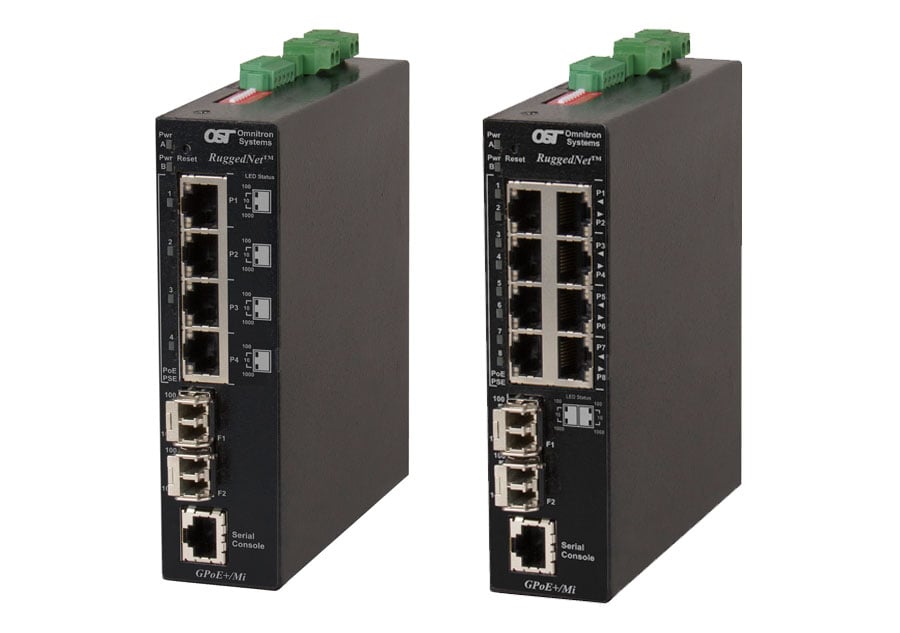
Browse Omnitron’s Industrial PoE Switches
FAQs about IoT and PoE switches in Hospitals
What are the main IoT applications in hospitals?
Common applications include patient monitoring systems, smart infusion pumps, nurse call systems, asset tracking, and telemedicine platforms.
Why is a PoE switch better than traditional power sources for hospital IoT?
PoE switch reduces complexity by delivering power and data through one cable, lowering costs while increasing reliability.
Can a PoE switch support critical medical devices safely?
Yes. With the right industrial-grade PoE switches, PoE can reliably power mission-critical devices while meeting healthcare compliance standards.
How do hospitals ensure IoT network security?
By segmenting IoT networks, using encrypted protocols, and deploying managed PoE switches with monitoring capabilities.
What is the lifespan of a PoE-powered IoT solution?
With quality equipment and proactive maintenance, PoE networks can operate reliably for 10–15 years, supporting multiple generations of IoT devices.
Conclusion: Reliable PoE switches are the Backbone of IoT in Hospitals
The future of healthcare is digital, and IoT in hospitals is driving better patient outcomes, efficiency, and safety. But without reliable Power over Ethernet, even the most advanced medical IoT devices cannot deliver their full potential.
At Omnitron, we specialize in providing robust PoE networking solutions tailored for healthcare environments—engineered for reliability, scalability, and compliance.
Contact Omnitron systems today to learn how our PoE solutions can power your hospital’s IoT network and support the next generation of patient care.
{module[844]}
